Case study · Web development
Rebuilding the Mahnken Painting & More website
Mahnken Painting & More is an owner-operated painting company in Rowlett, TX. We built its first website in October 2025, as a single page. On November 3, 2026 we replaced it with a 24-page static site. This is what was wrong with our first version, what we changed, and what we measured.
§ 01 The challenge
Our first version was one page
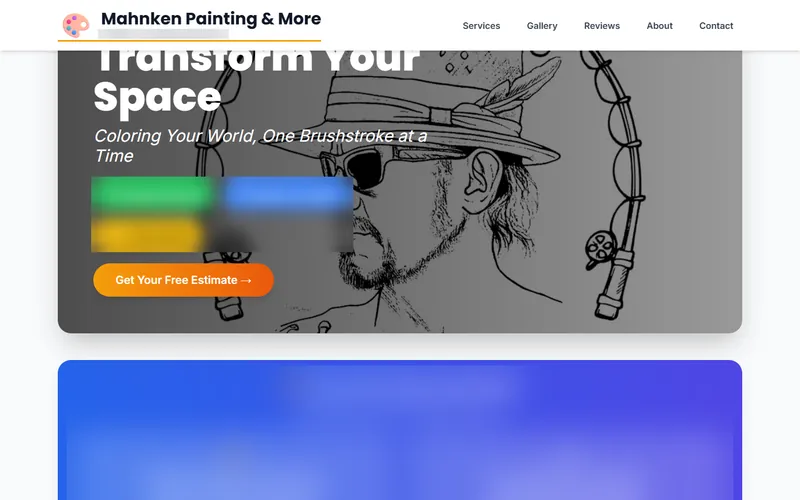
In October 2025 we shipped the whole site as a single index.html file. It looked busy and complete. Underneath, it worked against the client in four ways.
-
One URL pretending to be six pages
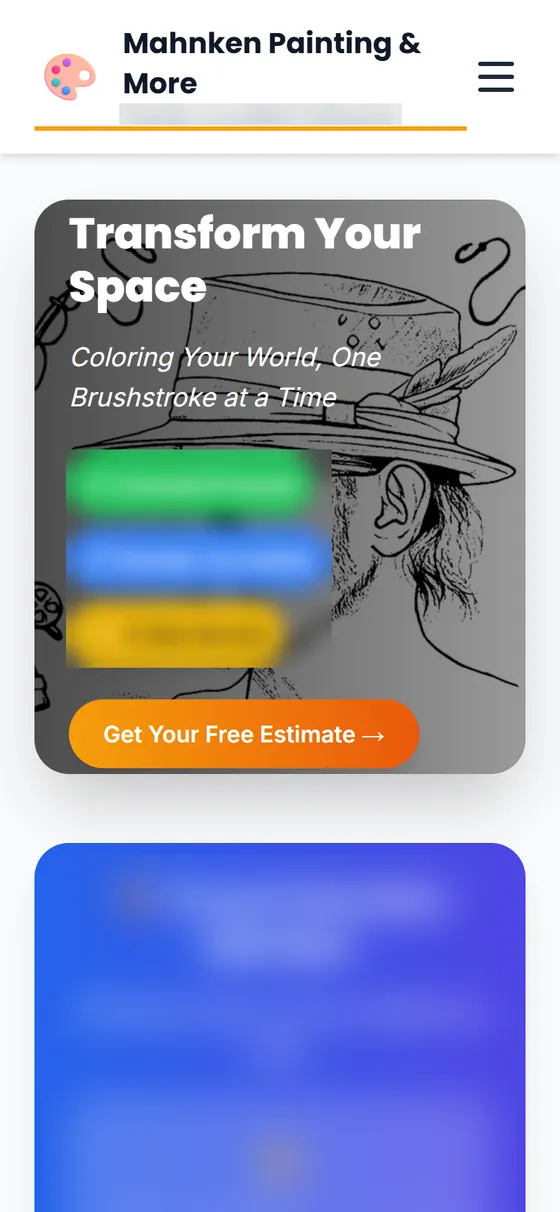
Home, services, gallery, testimonials, about and contact were hidden sections of a single page, switched by script. With JavaScript off, only the home section could be reached. The sitemap listed 28 addresses, but all of them were the same page: seven #fragment links times four http/https and www variants. Google generally doesn’t support URL fragments.
-
More metadata than content
The head section took 56% of the HTML: 286 meta tags, two keyword lists with 147 terms (some for services the business doesn’t offer), seven separate structured-data blocks (one of them rating markup Google doesn’t show for a business’s own site) and two canonical tags. The footer held hidden SEO text that sighted visitors couldn’t see and screen readers skipped. Google doesn’t use the keywords tag, and its spam policies name hidden text. We wrote that version, so this one is our lesson.
-
Everything loaded on every visit
Styles came from Tailwind’s Play CDN, which Tailwind says is for development only, as a render-blocking script. Fonts came from Google Fonts, and six of the seven images were hotlinked from Google Drive (the seventh from another website). Hidden sections still loaded two large gallery photos, a Google Forms iframe and TikTok and Instagram embeds.
-
Rough edges for visitors
On load, the script jumped the page 123 px, so the headline sat under the sticky header. The mobile menu controls weren’t buttons, so they didn’t work from the keyboard, and four files the page referenced didn’t exist.
§ 02 What we built
A real multi-page site, kept honest by its build
The rebuild replaced the single page in one commit that changed 158 files. Here are the three decisions that shaped it.
-
24 real pages instead of one
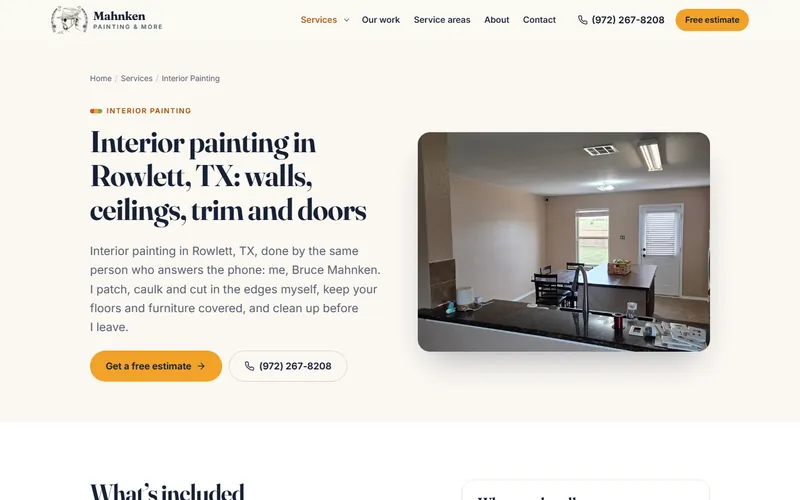
Home, a services hub with 7 service pages (interior, exterior, cabinet painting, drywall repair, deck and fence staining, wallpaper removal, commercial), a service-areas hub with 6 city pages (Rowlett, Rockwall, Garland, Sachse, Wylie, East Dallas), plus gallery, about, contact, FAQ, reviews, privacy, a color visualizer and a 404 page. 22 of them are in the sitemap, at clean addresses.
-
A small build that refuses to publish mistakes
A dependency-free Node script renders the pages to static HTML for GitHub Pages. Copy lives in JSON files, and one file holds the name, phone, email and hours. Before it writes anything, the build stops on a broken link or #anchor (checked case-sensitively, as GitHub Pages is), a missing image, a duplicated title or description, or a page without exactly one H1.
-
A design built around the client’s own emblem
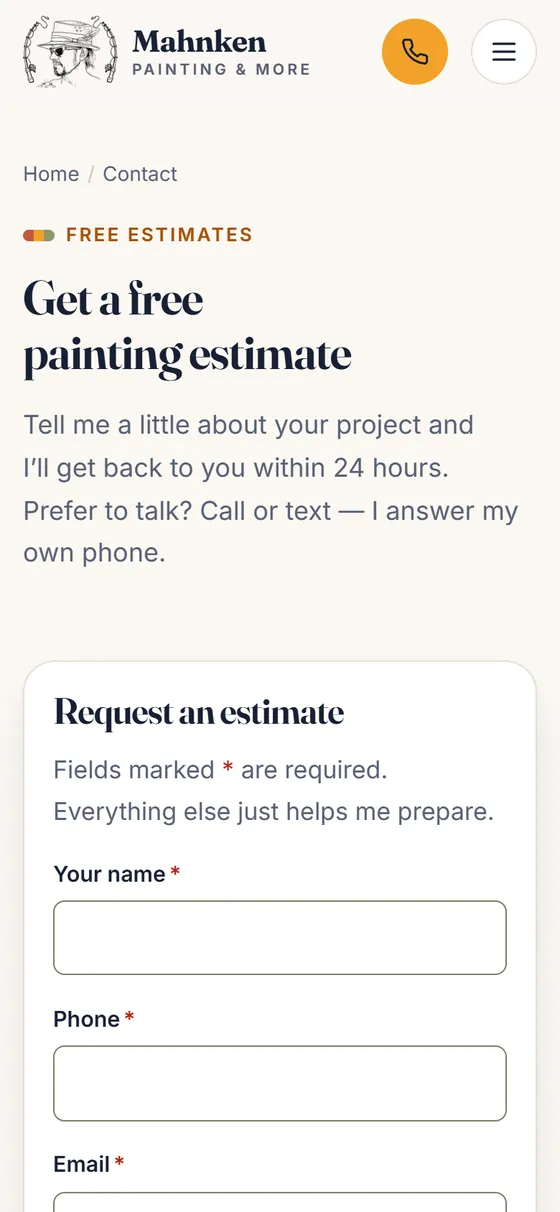
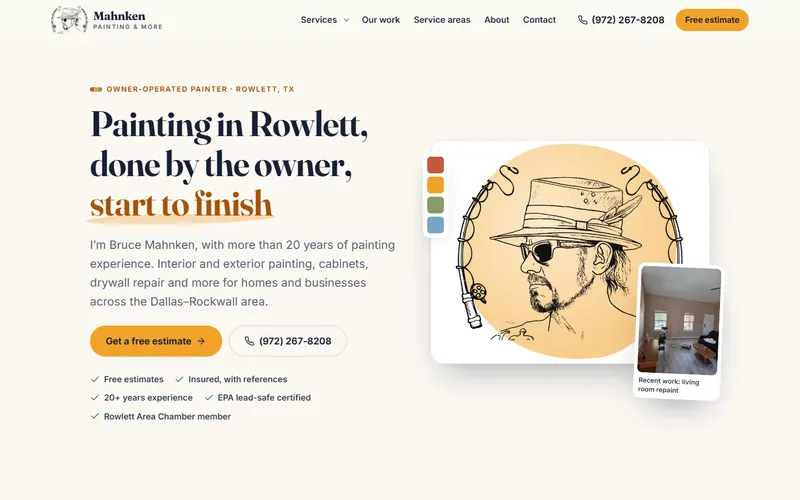
The client’s pen-and-ink emblem leads the design. Fonts are self-hosted, trimmed to Latin characters and the weights the CSS uses, and preloaded, with metric-matched fallbacks so text doesn’t jump. On phones, a bar with Call, Text and Free estimate stays in reach, and steps aside near the form and footer.
§ 03 Details
Details worth a closer look
Small decisions that make the site faster, more private and easier for the owner to keep running.
Photos
Real photos, kept private and light
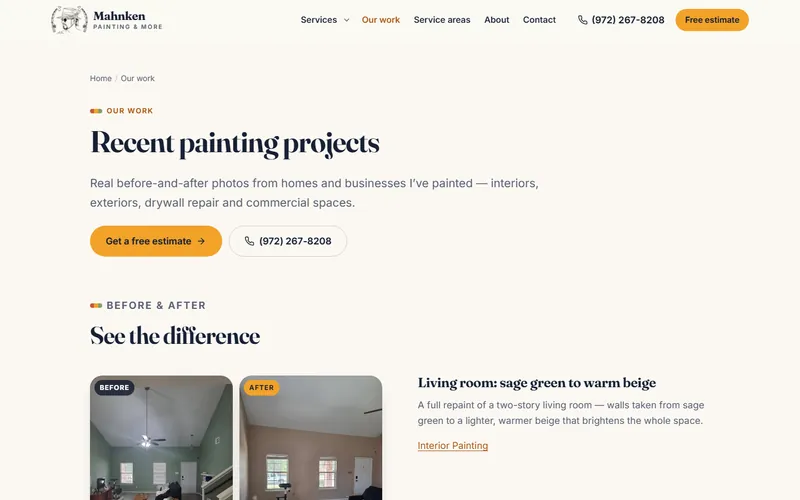
The photos are real ones from the client’s own jobs. Before publishing, the image script blurred house numbers, family photos and another company’s sign in the originals, and it never writes out camera metadata such as GPS location. Each photo is served as WebP in several sizes, so a phone downloads a phone-sized file, and photos below the fold load only when scrolled to.
Estimate form
An estimate form that works without JavaScript
The form is a plain HTML form that posts to the client’s existing Google Form, so it still sends with scripts turned off. Script adds inline error messages and folds the extra fields into the form’s description answer. Every field has a visible label, required ones are marked, and autocomplete is set so phones can fill them in.
One limit, written into the README: Google Forms doesn’t tell the website whether a submission arrived, so the page always says thanks.
-
One structured-data graph per page, and no review markup
Each page carries a single JSON-LD graph (business, website, breadcrumbs, services, FAQs). There are no keyword tags, no hidden text and no rating or review markup anywhere on the site. The reviews page is built but stays out of search and the menu until the client adds reviews.
-
No third-party code until a visitor asks for it
No page loads a script, style, image or frame from another server. The TikTok and Instagram videos are click-to-load: the outside player is created only when someone presses play.
-
Old links still land in the right place
Links to the old one-page site, like /#services or /#contact, redirect to the matching new page, so bookmarks and old shares keep working.
-
An owner’s manual in the repository
The README explains how to edit copy, build, add photos (with redaction), add client reviews with permission, and keep the estimate form working.
§ 04 Results
What we can measure so far
We measured both versions on Nov 3, 2026: the live rebuild, and a saved copy of our 2025 page with its outside resources fetched live. These are lab numbers, not traffic, rankings or leads.
- Indexable pages
- Before: 1after: 22
- Separate pages search engines can list
- Home page, first load
- Before: 1.39 MBafter: 218 KB
- 20 requests → 9 (desktop, main frame)
- Third-party hosts on load
- Before: 24after: 0
- Outside servers contacted by the home page
- Lighthouse mobile, Performance
- Before: 55after: 95
- Lab run on a local server
| Measure | Our 2025 version | Rebuild, 2026 |
|---|---|---|
| Indexable pages | 1 (28 sitemap entries, all versions of the same page) | 22, plus 2 kept out of search (reviews, 404) |
| Home page, first load (desktop, main frame) | About 1.39 MB, 20 requests | About 218 KB, 9 requests |
| Home page, including embedded frames | About 8.8 MB, 204 requests | About 218 KB, 9 requests |
| Third-party hosts contacted on load | 24 | 0 |
| Meta tags on the home page | 286 | 17 |
| Lighthouse mobile: Performance | 55 | 95 |
| Lighthouse mobile: Accessibility | 91 | 100 |
| Lighthouse mobile: Best Practices | 75 | 100 |
| Lighthouse mobile: SEO | 100 | 100 |
Before and after, side by side
Screenshots of mahnkenpainting.com. The emblem, project photos and business details shown belong to Mahnken Painting & More.


§ 05 Limits and next steps
What this write-up can’t tell you yet
Open limits
- No traffic, ranking or lead data. The rebuild went live on Nov 3, 2026, the day we measured it. We make no claim about calls or estimates.
- The reviews page has no reviews yet. It stays out of search and the menu until the client adds reviews, with permission.
- Google Forms can’t confirm a submission. The README explains how the owner can check that requests are arriving.
- Lab numbers only. Measured on one day in a lab setup. Real visitors’ phones and connections vary.
What we’d look at next
- Google Search Console, to confirm the 22 pages are crawled and indexed at their new addresses.
- Core Web Vitals from real visits, once there’s enough traffic to report.
- Client reviews on the reviews page, once the client adds them.
Sources
- Google Search Central — URL structure: fragments developers.google.com
- Google Search Central — Meta tags Google understands (keywords meta tag) developers.google.com
- Google Search Central — Spam policies: hidden text and link abuse developers.google.com
- Google Search Central — Review snippet structured data developers.google.com
- Tailwind CSS — Play CDN (“designed for development purposes only”) tailwindcss.com
§ 06 Your website
Is your site one page doing six jobs? Let’s look at it together.
Start with a free consultation about the site you have. You’ll get a written scope and a fixed-price quote before any work starts.
§ 07 Questions
Questions about this project
Anything else? Call or email — we reply within one business day.
Back to all workQ.01Did you build the original Mahnken website too?
Yes. The one-page version from October 2025 was ours; its footer carried our credit. This write-up covers what we got wrong in it and how the November 2026 rebuild fixed it.
Q.02Is a static website a good fit for a small business?
Often, when the site is mostly pages that change a few times a year: services, areas served, photos and a contact form. Static pages are quick to serve and there’s no server software or plugins to keep patched.
The trade-off is that edits go through a build step, so it suits an owner who doesn’t need daily changes or has someone to make them. A large store or a daily blog may be better on a content system such as WordPress. We build both; see web development.
Q.03What should a painting contractor’s website include?
From this project: a page for each service and each city you actually work in, real photos of your own jobs, a phone number one tap away on mobile, and an estimate form that works without JavaScript.
Q.04How much faster is the rebuilt site?
In our lab tests on Nov 3, 2026, the home page’s first load went from about 1.39 MB over 20 requests to about 218 KB over 9, and Lighthouse’s mobile Performance score went from 55 to 95. Those are lab numbers, not measurements from real visitors.